
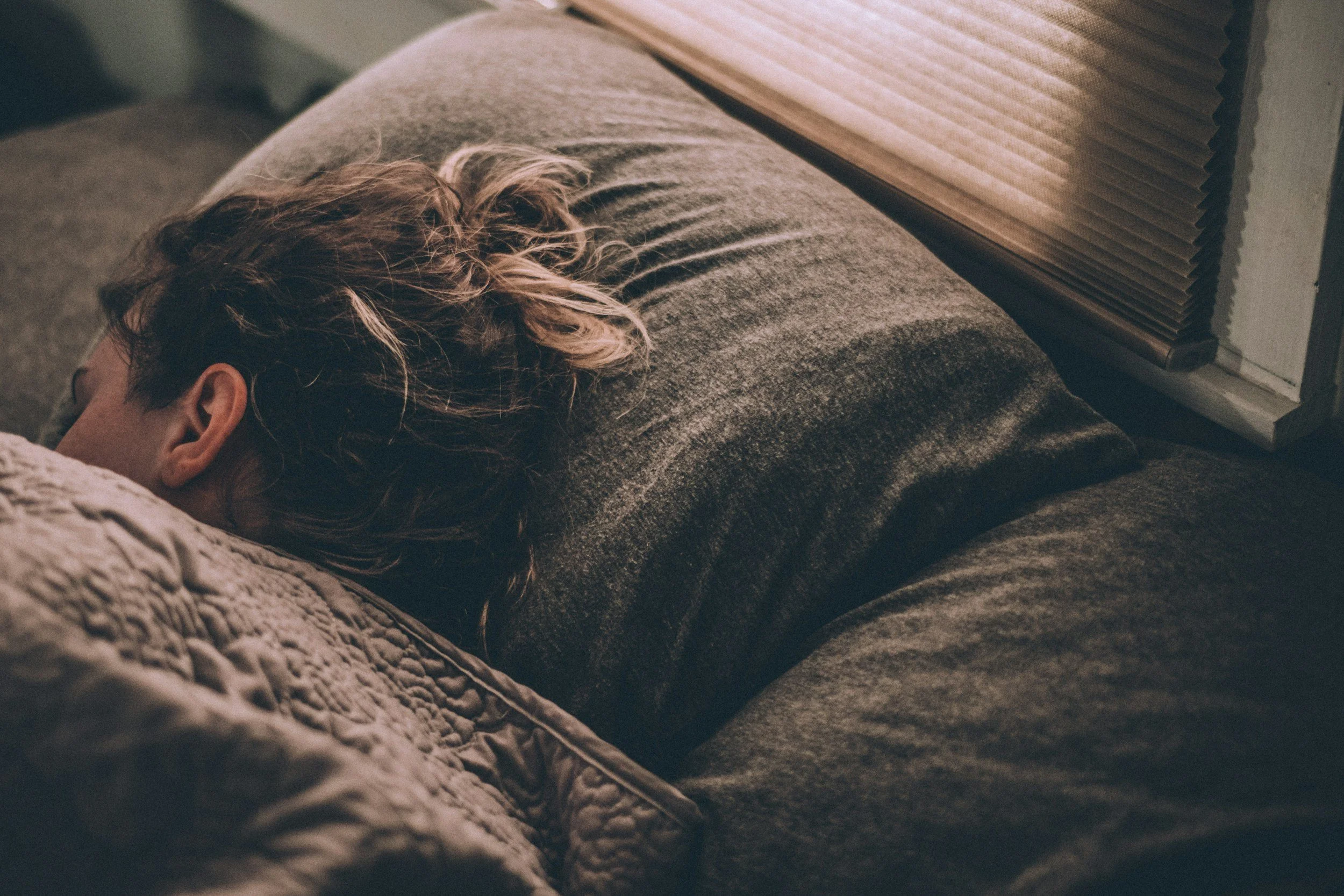
Natural Sleep & Anxiety Care for Women in Portland, OR
"When sleeping women wake, mountains move"
When your mind won't quiet down and your body won't rest, there's usually more going on than "stress."
Chelsie Moore is a functional medicine clinician and integrative dietitian nutritionist in Portland, OR, who helps women improve sleep and ease anxiety by addressing root causes. She looks at hormones, blood sugar, stress physiology and nutrition together, and sees clients in person in Portland and virtually.
Maybe you lie awake with a racing mind, or wake at 3 a.m. with your heart pounding for no clear reason. Maybe you've been told to try meditation or melatonin, and it hasn't been enough. Your body isn't broken. It's responding to something, and we can figure out what.
Does This Sound Familiar?
Poor sleep and anxiety tend to feed each other. The more tired you are, the more anxious you feel, and the more anxious you feel, the harder it is to sleep. You might be experiencing:
Trouble falling asleep because your mind won't slow down
Waking at 2 or 3 a.m. and struggling to fall back asleep
Night sweats or waking up hot
A racing heart, restlessness or a sense of dread, especially at night or first thing in the morning
Feeling "tired but wired"
Anxiety or irritability that gets worse before your period
Worry or overwhelm that feels bigger than the situation calls for
Relying on wine, screens or sleep aids to wind down
Waking up already exhausted
These aren't character flaws, and you're not "just an anxious person." Sleep and mood are deeply physical, and they respond to physical support.

Why Sleep and Anxiety Are So Connected in Women
Sleep and anxiety share much of the same biology, and women's hormones add another layer. Common physical contributors include:
Progesterone shifts: progesterone has a naturally calming effect. When it drops, as it does before your period and during perimenopause, sleep and mood often suffer
Estrogen fluctuations: these can trigger night sweats, hot flashes and sleep disruption
Blood sugar dips overnight: a drop in blood sugar can trigger a surge of stress hormones that wakes you up, often around 2 to 3 a.m.
Cortisol rhythm: chronic stress can flatten or flip your natural cortisol curve, leaving you wired at night and drained in the morning
Nutrient status: low iron, magnesium, vitamin D or B vitamins can affect sleep, energy and mood
Thyroid function: an overactive or underactive thyroid can show up as anxiety, palpitations or poor sleep
Caffeine, alcohol and screens: common coping tools that can quietly make things worse
This is why sleep hygiene tips on their own often fall short. When the underlying physiology is off, it's hard to relax your way out of it.
A Root-Cause Approach to Sleep and Anxiety
Instead of reaching straight for a sleep aid or telling you to "just relax," we look at what's keeping your nervous system on high alert and support your body's natural ability to rest:
Hormone patterns: how your cycle or perimenopause lines up with your sleep and mood symptoms
Blood sugar stability: meal and evening-snack strategies to prevent overnight dips
Stress physiology: practical, doable tools to calm your nervous system during the day so it can settle at night
Targeted labs: iron, thyroid, vitamin D, B12, blood sugar markers and other tests based on your history
Nutrition: foods and nutrients that support calm, steady mood and restful sleep
Evening routines that fit your life: realistic habits built with behavior-change strategies, not a 20-step bedtime ritual
Your plan may include personalized nutrition, targeted lab testing, lifestyle strategies, and pharmaceutical-grade, third-party tested supplements from one of our trusted partners. My work is complementary to mental health care. I'm happy to work alongside your therapist, psychiatric provider or doctor, and I'll refer out when you need more support than nutrition and lifestyle can offer.
Ways to Work Together
1:1 Sleep & Anxiety Care in Portland and Virtually
Personalized support for women who want to sleep through the night and feel calmer during the day. We start with an in-depth intake covering your sleep patterns, anxiety triggers, cycle, stress, nutrition, health history and goals. Next, we review your existing labs and add targeted testing where it's useful. From there, you get a gentle, step-by-step plan with ongoing support. Appointments are available in person in Portland or virtually.
Related Support
Sleep and anxiety are often tied to other hormone and metabolic concerns.
Hashimoto's & autoimmune nutrition →
Not Ready Yet? Start Here
Download the free guide, Women's Reset: A 7-Day Plan for More Balanced Hormones.
Meet Chelsie Moore
I'm Chelsie Moore, a functional medicine clinician and integrative dietitian nutritionist, and the founder of Moore Integrative Health in Portland, Oregon. I work primarily with women on mood and sleep, hormone health, perimenopause, fatigue, blood sugar regulation, and autoimmune concerns.
I hold a master's degree, two years of clinical residency, a certification in behavior change from the Yale School of Public Health, and I'm in on-going continuing education with Aviva Romm, MD with a pending certification in Integrative & Functional Women's Health. That behavior-change background shapes everything I do. A plan is only useful if it fits your real life, so we build one you can actually follow.
You deserve rest that actually restores you.
Sleep & Anxiety FAQs
Why do I wake up at 3 a.m. every night?
Common causes include a dip in blood sugar overnight that triggers stress hormones, shifting progesterone and estrogen (especially in perimenopause), a disrupted cortisol rhythm, alcohol, and anxiety. Identifying your pattern is the first step to fixing it.
Can hormones cause anxiety?
Yes. Fluctuations in progesterone and estrogen can affect mood-regulating brain chemicals, which is why many women notice anxiety worsening before their period or during perimenopause. Thyroid imbalances can also cause anxiety-like symptoms.
What natural approaches help with sleep and anxiety?
Stabilizing blood sugar, supporting your stress response, correcting nutrient deficiencies, consistent routines, and targeted supplements can all help. The most effective plan depends on what's driving your symptoms.
Can I work with you if I'm already seeing a therapist or taking medication?
Absolutely. My work complements mental health care and medication. Please don't stop or change a prescription without talking to your prescribing provider.
Do you offer virtual appointments?
Yes. I see clients in person in Portland, Oregon, and virtually.
Do you take insurance?
Moore Integrative Health is an out-of-network provider. I can provide a superbill you may submit for possible reimbursement, and HSA/FSA funds can often be used.
If you're in crisis or having thoughts of harming yourself, please call or text 988 (Suicide & Crisis Lifeline) or go to your nearest emergency room.
Rest Is Possible
You don't have to keep white-knuckling your way through anxious days and restless nights. When we understand what's keeping your system on alert, calm and deep sleep can become your normal again.
If you're in Portland or anywhere you can log on from, let's talk about what's going on and where to start.
Moore Integrative Health · Portland, Oregon · In-person and virtual appointments. Serving Portland and surrounding areas.