Building Muscle, Protecting Bones: A No-Fear Guide to Midlife Strength
Buckle up friends, this is a long one. A boring yet one of the most important topics for us women to take seriously. I promise it will be worth your while.
Muscle mass and bone density are two topics I never imagined becoming passionate about, but here we are. Both my grandmother and my mother developed osteopenia, so somewhere along the way I realized this isn’t just something that happens to older women. It is likely a part of my future as well. As I move through my late 30s and begin thinking more intentionally about aging, I’ve become less interested in chasing longevity for longevity’s sake and more interested in protecting the things that allow me to fully participate in life.
To hike, to play with my daughter or future grandkids, to travel, to get up and down off the floor without thinking twice, to live in a two story house. You catch my drift. Strong muscles and healthy bones aren’t about looking a certain way. It’s about maintaining quality of life and independence for the duration of our lives.
How Our Bones and Muscles Change During Midlife
Before we dive into what we can do to support our bones, I think it helps to understand what is actually happening underneath the hood. A little science first, if you will. I promise to keep it brief.
Only 49% of the population over age 50 has healthy bone mass, meaning that 51% of the population has low bone mass, with 9% of that group being diagnosed with Osteoporosis (Mahan & Raymond). These numbers are staggering! It is very common for people over 50 to be completely unaware of their bone health, and a lot of osteoporosis cases are undiagnosed.
Our bones are far from static, they’re a living tissue that is constantly being broken down and rebuilt. During childhood, adolescence, and early adulthood we’re in a period of building bone. Bone formation outpaces bone breakdown, enabling us to grow and gradually reach what’s known as our peak bone mass sometime around age 30. After 30, the balance slowly begins to shift. Moving through our 40s and beyond our bodies naturally begin breaking down bone a little faster than they can rebuild it– in other words breakdown starts outpacing formation. For women, this process is accelerated with the loss of estrogen in the menopausal years. Over time, the gradual loss can lead to osteopenia and eventually osteoporosis if enough bone density is lost.
None of this is meant to sound scary–this is all normal physiologic processes of aging. The good news is that while we can’t stop aging (do I need to repeat that louder for the people in the back) we can influence how we age. And that’s where nutrition, movement, and a few evidence based interventions can make a meaningful difference.
Exercising for Bone Density & Muscle Mass
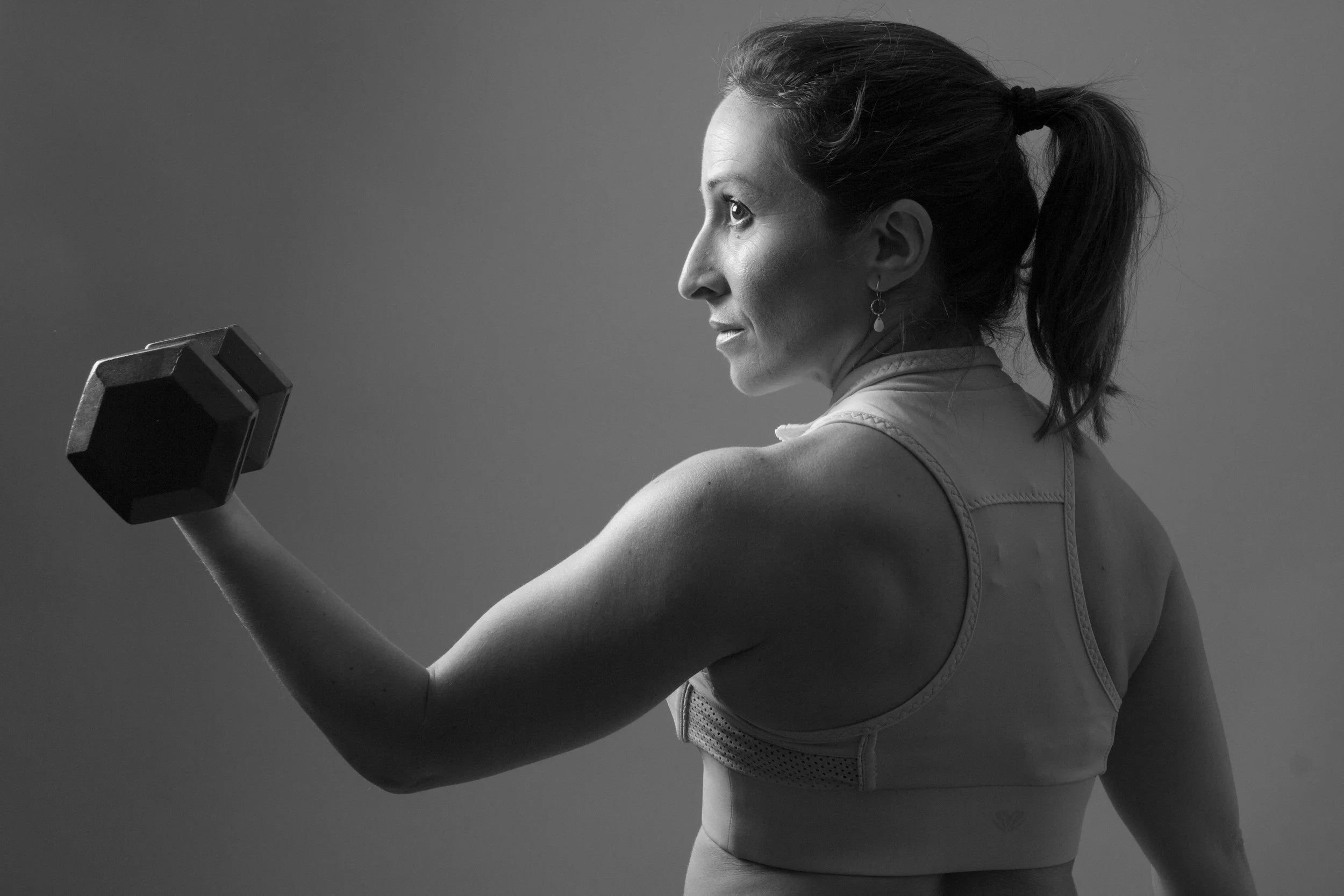
It is impossible to talk about bone health without also talking about muscle. Our muscles don’t just help us move through the world, they also provide mechanical forces that tell our bones they need to stay strong. Every time we walk, climb stairs, bike, carry groceries, or challenge muscles through exercise we send our skeleton a message: we need you.
Think about building muscle and supporting bone density in your 30s, 40s, and 50s the same way your financial advisor talks about saving for retirement. The deposits you make today pay dividends decades from now. Muscle becomes much harder to build as we age, particularly after menopause, but that doesn’t mean it’s impossible. It simply means that consistency matters so much more than intensity. And this is where I want to offer a little bit of reassurance.
The internet can make it seem like healthy aging requires spending six days a week in the gym deadlifting 200 pounds. It most certainly doesn’t. We’re not training to become body builders. We’re training for something much more meaningful: health span. The best exercise program isn’t the one that’s trending on instagram, it’s the one we’re still doing ten years from now.
So what we need to ask ourselves is this: what forms of exercise do I actually enjoy doing. Something we see ourselves being able to do consistently for 90-120 minutes per week or a minimum of 6-8 sets per muscle per week. Yoga, walking, cycling, hiking, barre, pilates, resistance bands, or well tolerated strength training in a gym are all great options. Sure, weight training in the gym has the strongest evidence for improving bone density and preserving muscle mass, but please know that it isn’t the only form of movement that matters. You may need support from a trainer to learn technique, or it just may not be for you. And that’s okay. Start with the movement that feels accessible today. Doing something consistently will always beat doing nothing because the “perfect” workout feels out of reach.
One last thing I’d love for us to stop doing is making women afraid of menopause. Muscle mass change is not exclusive to menopause. There is a myth floating around on the internet that we lose 10% of muscle mass during perimenopause and menopause. The research doesn’t support this. Data from the SWAN study shows about .39-1.5% of modest muscle mass loss over the course of the menopausal transition. It’s not catastrophic. Most muscle mass loss actually occurs over the age of 70. That doesn’t mean muscle isn’t important, it just means we don’t need fear to motivate us. We can choose to build strength out of a desire to stay active and do the things that are important to us, not because we’re scared our bodies are falling apart.
To give you an example of what this looks like in real life, let me pull back the curtain on my mornings.
As of this writing, I am a mother to a four year old who’s home with us all summer. I’m running a business, trying to keep up with the cooking and grocery shopping, attempting to keep the house from growing mold, and somehow fitting movement into the day. Like you, I’m not sitting around with an extra hour to spend at the gym.
So I stopped trying to find the perfect workout and started looking for small windows of opportunity to move. I keep a few weights in my living room where I can’t ignore them. After I brush my teeth I do 15 weighted squats. While the eggs are cooking I knock out a set of push-ups. Stir the eggs. Another set. While my daughter is (hopefully) getting dressed or occupied in some way, I do dead bugs and a couple of hamstring exercises on the floor. Sometimes I finish with a wall sit or two while I brush my teeth.
By the time breakfast is over, I’ve squeezed in 15-20 minutes of strength training without ever officially starting a workout. Is it glamorous? Not even a little. But it gets done, and that is the point. The women I know (most of us moms) don’t need a more complicated exercise routine. We need one that fits into reality.
Nutrition: The Other Half of the Equation
If exercise is the biggest lever we have for protecting our bones and muscle as we age, nutrition comes in a close second. And yes, we have to talk about protein. I know. If you’ve spent even less than a second on social media lately, you’ve probably been told to put protein in your coffee, your water, your overnight oats, and somehow even your chocolate bar. I giggled the other day at the grocery store when I saw a heavily sweetened coffee beverage with a big yellow label on the front that said “Now with added protein!” Protein has become the nutrition equivalent of duct tape, apparently it fixes everything. Feeling tired? Just throw some protein at it! Kidding.
The truth is a little less exciting. So let me break it down for you as to what the research actually says. And no, you don’t need to start putting protein in your water.
Protein is indeed incredibly important, particularly as we age, because it provides the building blocks our bodies need to maintain and repair muscle. But that doesn’t mean more is always better. For a generally healthy woman in perimenopause or menopause whose goal is to preserve muscle mass and function, a practical evidence-informed target is roughly 1.2–1.6 g protein/kg body weight/day, alongside progressive resistance training. For women who are sedentary or just beginning strength training, the lower end may be plenty. For women who are actively strength training, dieting, very physically active, or trying to gain lean mass, moving toward 1.4–1.6 g/kg/day makes sense.
So, for a 150-lb / 68-kg woman:
1.2 g/kg = ~82 g/day
1.4 g/kg = ~95 g/day
1.6 g/kg = ~109 g/day
Any more protein than this is just not substantially supported enough by the literature at this point. The good news is you don’t need to obsess over hitting a perfect number every single day.
Aim to include a quality source of protein into three meals divided throughout the day, or three meals and a couple of snacks. However you can hit the target that works with your lifestyle. The best forms of protein are going to be from real foods and not protein powders, protein enhanced snack foods, protein coffee, protein chocolate, protein water, etc. Whether those come from animal foods, legumes, tofu, tempeh or other minimally processed options is far more important than the degree of processing the protein has to go through before it makes it to your plate. I’ll save the deeper dive into protein timing, meal ideas, and practical ways to reach these targets for another article.
Protein gets most of the attention, but it isn’t the only nutritional factor that influences muscle and bone health. A dietary pattern rich in whole, minimally processed foods provides the vitamins and minerals your skeleton depends on. That includes eating plenty of vegetables (5 cups/day), dark leafy greens, ensuring adequate calcium intake from dairy or non dairy sources (women need 1000-1200mg daily), moderating sodium (no more than 1.5-2g daily), moderating alcohol (one serving per day or less), and caffeine, and including foods like legumes, nuts, seeds, and fish with edible bones such as sardines or mackerel. Soy foods like tofu or tempeh also deserve a special mention, which we’ll come back to in a moment.
And one surprisingly interesting food intervention? Prunes. Several randomized trials in postmenopausal women have found that regularly eating prunes may help preserve bone mineral density, potentially through their polyphenols and effects on bone turnover. It's certainly not a replacement for exercise, adequate protein, calcium, or medical treatment when indicated, but it's a pretty delicious example of how food can be part of the bone-health conversation.
To circle back on the calcium subject, I wanted to give you a breakdown of what foods have calcium in them and how much. I won’t go down the dairy versus non-dairy rabbit hole on this one, my general advice is to limit dairy and aim to get some of the calcium from plant based sources:
Tofu 350 mg per ½ cup serving
Tapioca 300 mg per ½ cup serving
Chia seeds 300 mg per 1.5 ounces serving
Collard greens 210 mg per ½ cup serving
Kale 205 mg per ½ cup serving
Bok Choy 190 mg per ½ cup serving
Figs 135mg per 5 fig serving
White Beans 120 mg per ½ cup serving
Turnip Greens 104 mg per ½ cup serving
Spinach 99 mg per ½ cup serving
Almonds 93 mg per ¼ cup serving
Sesame Seeds 51 mg per 1 tablespoon serving
The common thread here isn’t a single superfood or supplement or latest wellness trend. It’s building meals and nourishment around foods that consistently provide your body with the nutrients and building blocks it needs over time. Food first, supplements second. If you are truly unable to get the necessary nutrients from diet, this is where a supplement can come in and support.
Where Supplements Fit In
When I think about supplements in my clinical practice, I tend to divide them into two categories: foundational support and evidence-based interventions for specific conditions or symptoms. The same framework applies to bone health.
There are foundational nutrients that help create an environment where healthy bones can thrive, and there are targeted interventions that may be appropriate for women with diagnosed low bone density. There are also situations where prescription pharmaceuticals are the right tool, and that’s okay too. My goal isn’t to convince anyone that supplements are always better than pharmaceuticals. It’s to help women understand what options exist and where each one fits in. As always talk with your doctor or practitioner before starting anything.
Start With the Foundation
Despite all the attention calcium receives, the evidence for calcium supplementation is surprisingly underwhelming.
A large 2015 review published in The BMJ pooled data from randomized controlled trials and found that calcium supplements increased BMD by only 0.7-1.8%, and these improvements did not translate into clinically meaningful reductions in fracture risk. Similarly, analyses from the SWAN study cohort suggest that calcium supplementation during the menopausal transition does not substantially slow bone loss or reduce fractures. Calcium alone cannot overcome the hormonal changes driving bone resorption.
For that reason, I encourage women to think of food first.
Aim to meet your calcium needs through quality dairy sources (if tolerated), or the plant based sources I outlined in the nutrition section above. Supplements can absolutely help fill nutritional gaps, but I don’t recommend relying on them as your primary strategy.
Vitamin D is a different story.
Vitamin D deficiency is something I see in practice ALL OF THE TIME, particularly here in the Pacific Northwest. Because vitamin D plays an essential role in calcium absorption and bone metabolism, I generally recommend routine testing rather than guessing. For many women, a daily vitamin D3 supplement (often paired with vitamin K2) providing around 2,000 IU/day is a reasonable maintenance dose. Women who are deficient frequently require higher doses, but I strongly recommend working with your healthcare provider to determine the appropriate amount and to monitor blood levels over time.
Magnesium is another nutrient I commonly recommend. It’s involved in hundreds of enzymatic reactions throughout the body, including those that support bone health, and many people simply don’t consume enough through diet alone. I generally recommend around 400mg daily as Magnesium Glycinate because it’s well tolerated, although Magnesium Citrate has more extensively in the bone health literature.
Beyond those three, a quality third party tested multivitamin/mineral that includes Vitamin B6, folate, Vitamin B12, Silicon, Boron, Zinc, Copper, and Manganese will contribute to healthy bone metabolism. Likewise omega-3 fatty acids in the form of a quality fish oil or cod liver oil can fill in the gaps if you aren’t able to get omega-3 rich fish into your diet three times per week.
Struggling to figure out what supplements are third party tested for purity? If you go to my website and scroll on down to the middle of the home page, you’ll see a link to my Fullscript Women’s Health Dispensary where I’ve hand picked a lot of the supplements that have the most literature to support them. I give all of my clients a 15% discount, which you can enjoy as well.
What About Creatine?
We can’t talk about muscle health these days without talking about creatine. So here’s my perspective.
The marketing is ahead of the evidence in my opinion. It’s not overhyped because it doesn’t work, I think it’s overhyped because the marketing often leaves out an important detail. Creatine is not a substitute for resistance training. The literature suggests that creatine alone has little to no meaningful effect on muscle mass. Resistance training alone preserves and builds muscle. When the two are combined, creatine may provide a modest additional benefit for lean muscle mass and, in some studies, strength and physical function.
One of the strongest double-blind randomized trials followed 237 postmenopausal women for two years. Women who combined creatine supplementation with resistance training gained slightly more lean mass than those performing the same exercise program with a placebo. Importantly, creatine had no effect on bone density, and every participant was strength training. (Chilibeck, et al). The key take away here is this supplement wasn’t replacing exercise, it was complementing it.
A Targeted Intervention: Soy Isoflavones
One nutritional intervention that deserves far more attention than it gets is soy isoflavones. Soy has become one of the most controversial foods in nutrition, yet much of that controversy isn’t reflected in the scientific literature. One nutritional intervention that deserves far more attention than it gets is soy isoflavones.
Soy has become one of the most controversial foods in nutrition, yet much of that controversy isn’t reflected in the scientific literature.
Isoflavones are naturally occurring plant compounds that have weak estrogen-like effects in the body. Because estrogen plays such an important role in maintaining bone density, researchers have spent decades studying whether soy might help reduce the accelerated bone loss that occurs during and after menopause.
The results are encouraging.
Clinical trials suggest soy isoflavones can help support bone health by slowing bone breakdown while promoting bone formation. One randomized controlled trial found that a supplement providing 105 mg of mixed soy isoflavones increased bone calcium retention by approximately 3.4% in postmenopausal women. A subsequent meta-analysis reported favorable effects with doses as low as 90 mg/day.
Does that mean every woman should start taking a soy isoflavone supplement?
Not necessarily.
But for women with osteopenia or those at elevated risk of bone loss who are looking for additional evidence-based strategies, it’s certainly a conversation worth having with a knowledgeable healthcare provider.
Like every other intervention we’ve discussed, soy isoflavones work best as part of a larger lifestyle that includes regular movement, adequate protein, and a nutrient-rich diet.
Botanical Support
If you’re a lover of herbal medicine like I am, there are a handful of botanicals that may provide additional support for bone health. While the research isn’t as strong as it is for nutrition, exercise, or soy isoflavones, herbs have a long tradition of being used to nourish the body and can be a beautiful complement to an overall bone-supportive lifestyle.
Some of my favorites include:
Nettle – A mineral-rich herb that’s naturally high in calcium and other trace minerals. I love it as a long-steeped infusion.
Oatstraw – Another deeply nourishing, mineral-rich herb that has traditionally been used to support healthy bones and connective tissue.
Red Clover – Rich in isoflavones, red clover has been studied for its potential role in supporting bone health during menopause.
Herbal vinegars – Infusing mineral-rich herbs into apple cider vinegar is a traditional way of extracting minerals while creating a delicious addition to salads and vegetables.
I don’t think of these herbs as miracle cures. I think of them as another way to gently nourish the body over time: one cup of nettle tea, one nourishing meal, one walk, one strength session at a time.
Medical Interventions Have a Place
Nutrition, movement, and smart supplementation go a long way, but for some women they aren’t enough on their own, and that’s not a failure. It just means the body needs more support.
Hormone replacement therapy is one of the most effective tools we have for protecting bone density, and timing matters. Menopause hormone therapy tends to work best when started during perimenopause, closer to when estrogen first begins to decline. For women experiencing early menopause, whether from a total hysterectomy, ovarian failure, or other causes, hormone therapy can be especially important for preventing osteoporosis, since they’re losing estrogen’s protective effects earlier and for longer than most.
If bone loss is already significant, pharmaceutical treatment may be the right next step. Bisphosphonates, like Fosamax, are among the most commonly prescribed, slowing the rate at which bone breaks down. Other options include SERMs and calcitonin, each working through a different mechanism.
None of these are decisions to make alone. Work with your doctor to understand your bone density, your personal risk factors, and which of these tools, if any, makes sense for you.
The Bottom Line
The internet has a funny way of making healthy aging feel incredibly complicated. One day you’re told to lift heavy or you’ll become frail. The next day everyone is talking about creatine. Then collagen. Then protein powders. Then another supplement you’ve never heard of. The reality is much less dramatic and overwhelming.
Protecting your muscles and bones doesn’t require perfection and a $500/month supplement bill. It requires consistency. Move your body in ways you genuinely enjoy, challenge your muscles a 2-3 times each week, eat enough protein from real food, build meals around nutrient-dense whole foods, and spend time outside. It’s that simple.
Unfortunately simple doesn’t make the wellness industry billions of dollars. And sometimes simple feels harder to accomplish without the right support in place. That’s where nutrition professionals and personal trainers come in.
If you’re approaching menopause, talk with a trusted healthcare provider about whether interventions like menopause hormone therapy or soy isoflavones are appropriate for you based on your individual health history.
One thing I want to leave you with is this:
I don’t want women to become afraid of aging, I want us to become prepared for it. There’s a huge difference. Aging isn’t something we have to fight it’s something we can support.
And every walk you take, every nourishing meal you eat, every time you challenge your muscles—even just a little—you are making an investment in the woman you’ll become 20 or 30 years from now.
That feels like a much healthier way to think about aging than living in fear of it, wouldn’t you say?
References
Agostini, D., Donati Zeppa, S., Lucertini, F., Annibalini, G., Gervasi, M., Ferri Marini, C., Piccoli, G., Stocchi, V., Barbieri, E., & Sestili, P. (2018). Muscle and bone health in postmenopausal women: Role of protein and vitamin D supplementation combined with exercise training. Nutrients, 10(8), 1103. https://doi.org/10.3390/nu10081103
Chilibeck, P. D., Candow, D. G., Gordon, J. J., Duff, W. R. D., Mason, R., Shaw, K., Taylor-Gjevre, R., Nair, B., & Zello, G. A. (2023). A 2-yr randomized controlled trial on creatine supplementation during exercise for postmenopausal bone health. Medicine & Science in Sports & Exercise, 55(10), 1750–1760. https://doi.org/10.1249/MSS.0000000000003202
Ma, D.-F., Qin, L.-Q., Wang, P.-Y., & Katoh, R. (2008). Soy isoflavone intake inhibits bone resorption and stimulates bone formation in menopausal women: Meta-analysis of randomized controlled trials. European Journal of Clinical Nutrition, 62(2), 155–161. https://doi.org/10.1038/sj.ejcn.1602748
Mahan, L. K., & Raymond, J. L. (2017). Krause’s food and the nutrition care process (14th ed.). Elsevier.
Pawlowski, J. W., Martin, B. R., McCabe, G. P., McCabe, L., Jackson, G. S., Peacock, M., Barnes, S., & Weaver, C. M. (2015). Impact of equol-producing capacity and soy-isoflavone profiles of supplements on bone calcium retention in postmenopausal women: A randomized crossover trial. American Journal of Clinical Nutrition, 102(3), 695–703. https://doi.org/10.3945/ajcn.114.093906
Study of Women’s Health Across the Nation. (n.d.). SWAN: Study of Women’s Health Across the Nation. Retrieved August 11, 2026, from https://www.swanstudy.org/
Tai, V., Leung, W., Grey, A., Reid, I. R., & Bolland, M. J. (2015). Calcium intake and bone mineral density: Systematic review and meta-analysis. BMJ, 351, h4183. https://doi.org/10.1136/bmj.h4183
Weed, S. (2008, October). Anti-cancer lifestyle: Nourishing and tonifying herbs & mineral-rich medicinal vinegars. Wise Woman Herbal Ezine, 8(10). http://www.susunweed.com/herbal_ezine/October08/anti-cancer.htm
Zheng, X., Lee, S.-K., & Chun, O. K. (2016). Soy isoflavones and osteoporotic bone loss: A review with an emphasis on modulation of bone remodeling. Journal of Medicinal Food, 19(1), 1–14. https://doi.org/10.1089/jmf.2015.0045